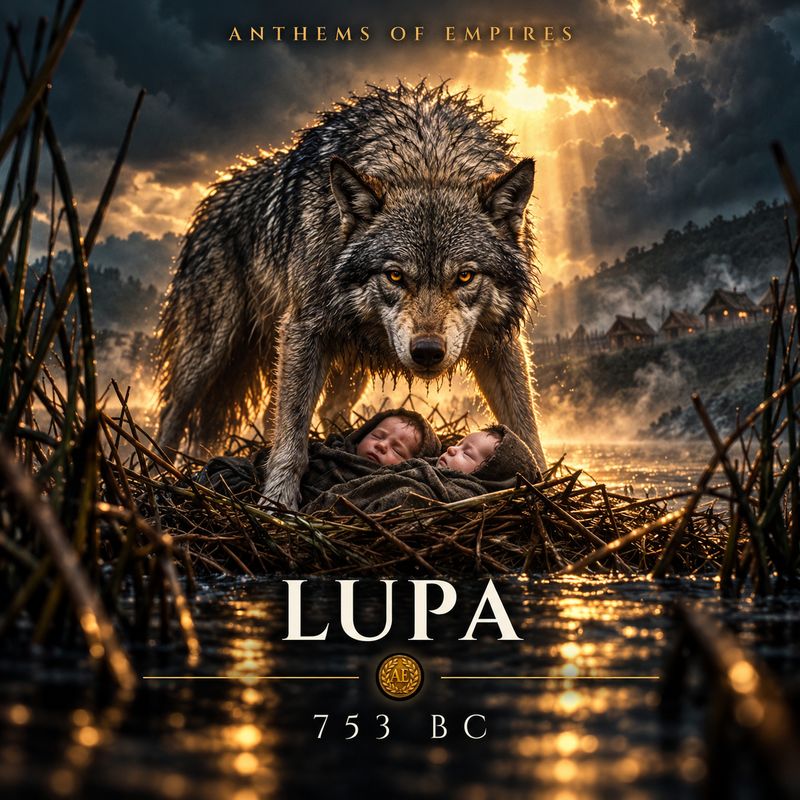
LUPA
Numitor, rightful king of Alba Longa, is pushed off his throne by his brother Amulius. To end Numitor's line, Amulius makes his niece Rhea Silvia a Vestal priestess, sworn never to marry. She bears twins anyway and names the war-god Mars as their father. The king orders the babies drowned in the Tiber. The river is in flood; the basket is left in shallow water and comes to rest by a fig tree. A she-wolf, coming down to drink, gives them her milk, until the shepherd Faustulus finds them and his wife Larentia raises them. Grown, the brothers restore their grandfather, then decide to found a city of their own. They quarrel over who should rule it and turn to the birds: Remus sees six vultures first, Romulus sees twelve. In the fight that follows Remus dies, and the city takes Romulus' name.
Legend. Even Livy treats the wolf with doubt: some said 'lupa' was a nickname for Larentia herself. Remus' death comes in two versions. 753 BC is the traditional date worked out by later Romans. What archaeology does show: huts on the Palatine hill from about the 8th century BC.